Homestead
Rental property management for landlords with a handful of properties: units, tenants and leases, rent collection with online bank payments and automatic late fees, maintenance, finances and 1099s, and leases signed online. Residents get their own portal to pay rent, sign and request repairs.
- Know who's paidEvery lease has a ledger, and one board shows the whole month: paid, partial, unpaid.
- Rent paid onlineResidents pay by bank transfer or card, straight to the landlord's own account.
- Leases signed onlineSend a lease and its addendums as one packet; the resident signs from their phone.
- Tax time in minutesProfit and loss by property, a rent roll and 1099-NEC totals, exported to CSV.
The problem
Most small landlords run their rentals out of a spreadsheet, a stack of paper leases and a phone full of texts. Rent comes in by check, Venmo and cash, and working out who still owes what at the end of the month means going back through all of it. Late fees get forgotten, lease renewals sneak up, and every January someone rebuilds a year of expenses for the accountant.
The big property-management suites are built for management companies with hundreds of doors. Homestead is built for the owner with a duplex, a few houses and a lot or two, and it does the parts that eat their evenings.
What's in it
- Properties and units
- Single-family homes, multi-family buildings, trailer lots and mixed properties, each with its rentable units, beds and baths, rent and status. Each property page pulls together its leases, tenants, maintenance, money and documents.
- Tenants
- Contact details, employer and income, emergency contact, other occupants and pets, and documents, all on one profile.
- Leases
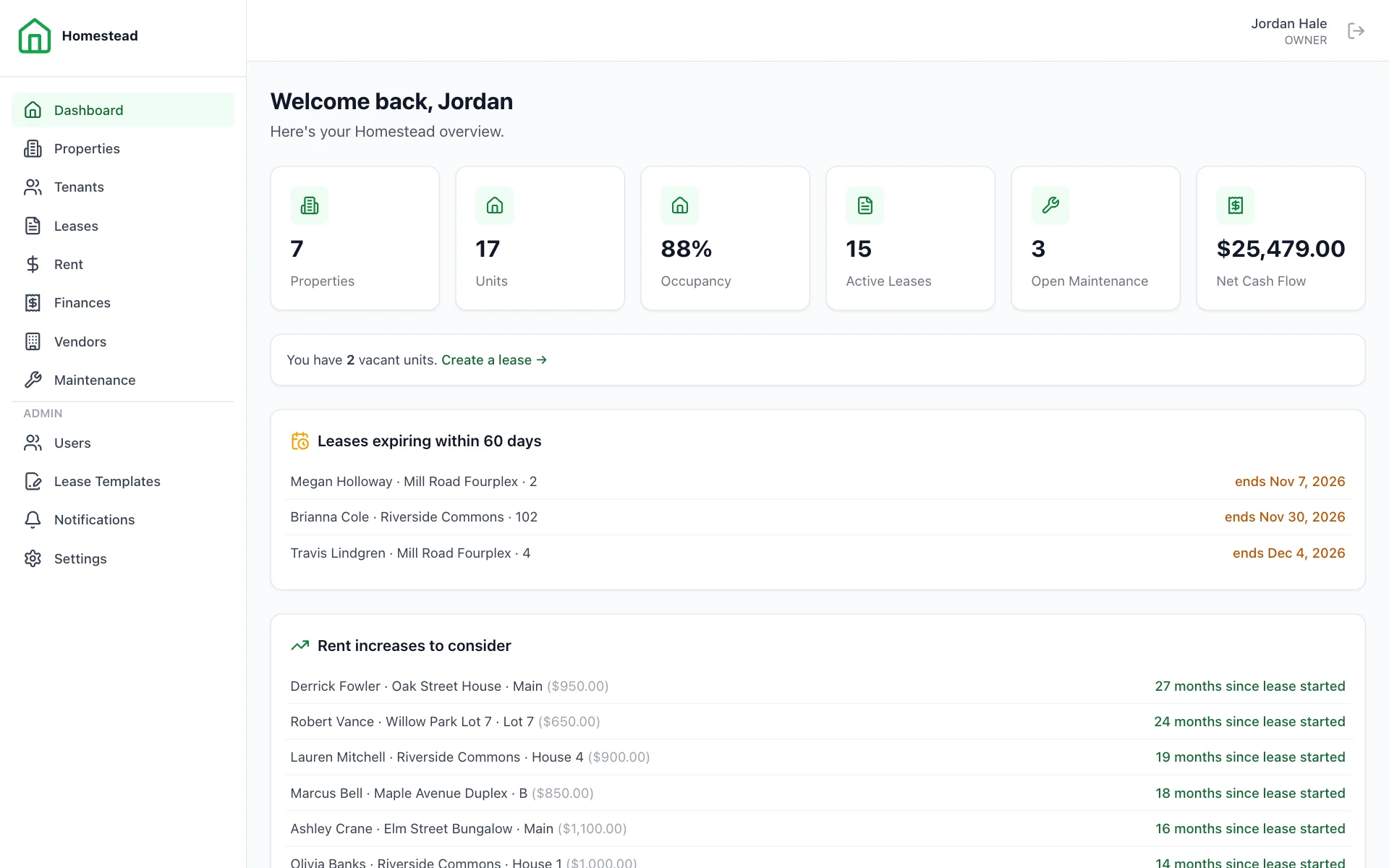
- Pending, active and ended leases that keep each unit's occupancy up to date, renewals with a new end date and rent, and recurring monthly fees like pet rent or utility bill-backs. The dashboard flags leases ending in the next 60 days and leases a year or more old that may be due for a rent increase.
- Rent collection
- A ledger per lease with charges, payments and a running balance; the month's charges generated in one click; payments recorded by check, cash, Zelle or Venmo; and a monthly board of who's paid, partial or unpaid.
- Automatic late fees
- Set the fee and the grace period once. Homestead checks every morning and adds the fee to anything past due, and a waived fee stays waived.
- Online rent payments
- Each landlord connects their own Stripe account. Residents pay from the portal by bank transfer first, with card as a fallback, and the money settles to the landlord's account and pays out to their bank. Payments post to the ledger on their own.
- Maintenance
- Repair tickets per unit with priority, status and assignee, opened by the landlord or the resident, with the resident notified as the status changes.
- Finances
- Income and expenses tagged to a property, unit or vendor, a cash-flow summary, and CSV exports for transactions, profit and loss by property, and the rent roll.
- Vendors and 1099s
- Contractors and service providers with their tax IDs. Link expenses to them and Homestead totals each vendor for the year and flags who needs a 1099-NEC.
- Lease signing
- Templates for leases, addendums, disclosures, notices and inspection checklists with merge fields, sent alone or as one packet. The resident signs in the portal, co-signers and guarantors sign from an emailed link, and the landlord counter-signs. Every step lands in an audit trail and the signed PDF is saved and emailed.
- Documents
- Leases, photos, receipts, inspections and insurance attached to the property, lease or tenant they belong to.
- Reminders
- Email and text reminders before rent is due and when it's late, receipts for payments, maintenance updates, signature reminders, and a heads-up to the owner when a lease is about to end. Every message is logged.
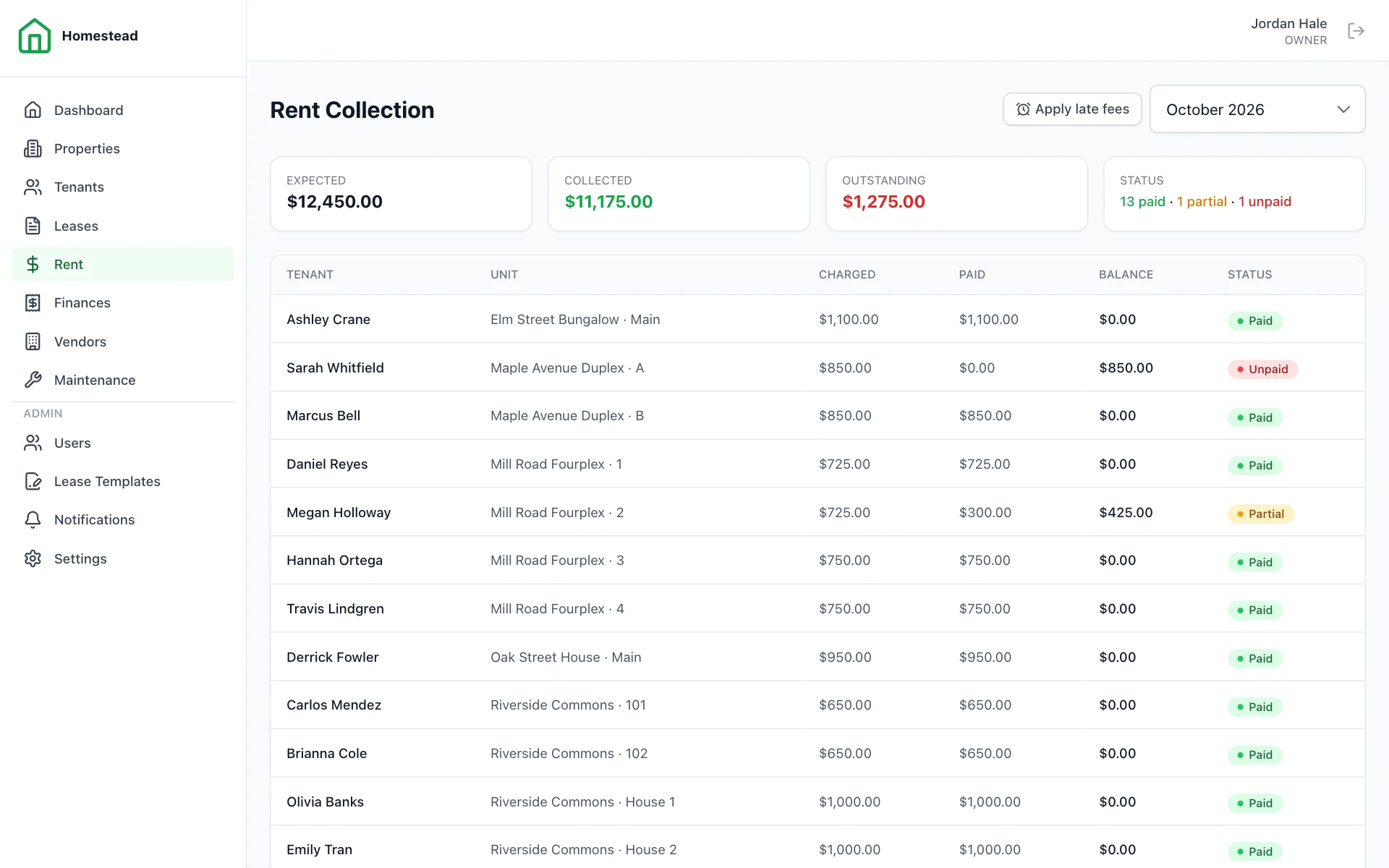
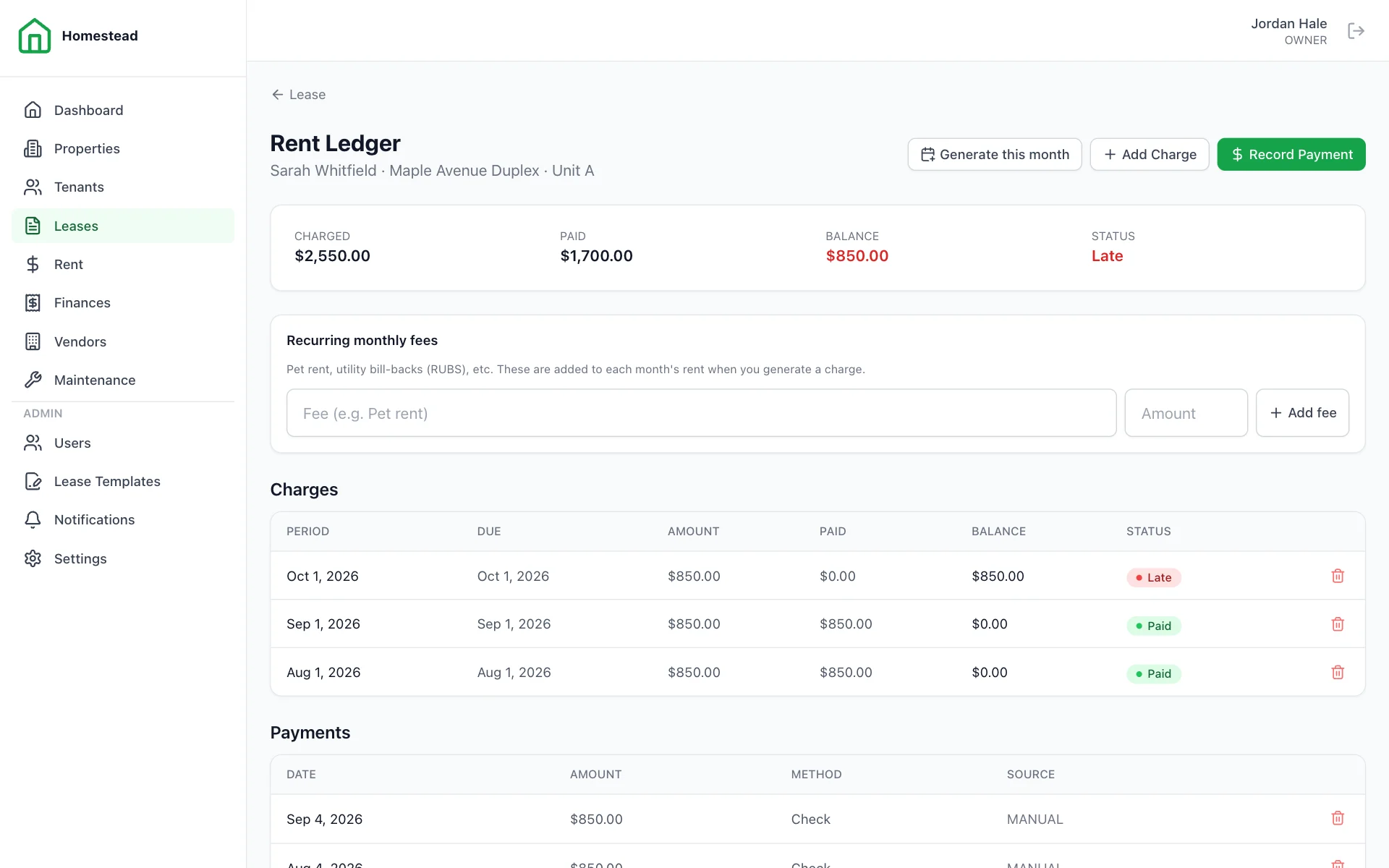
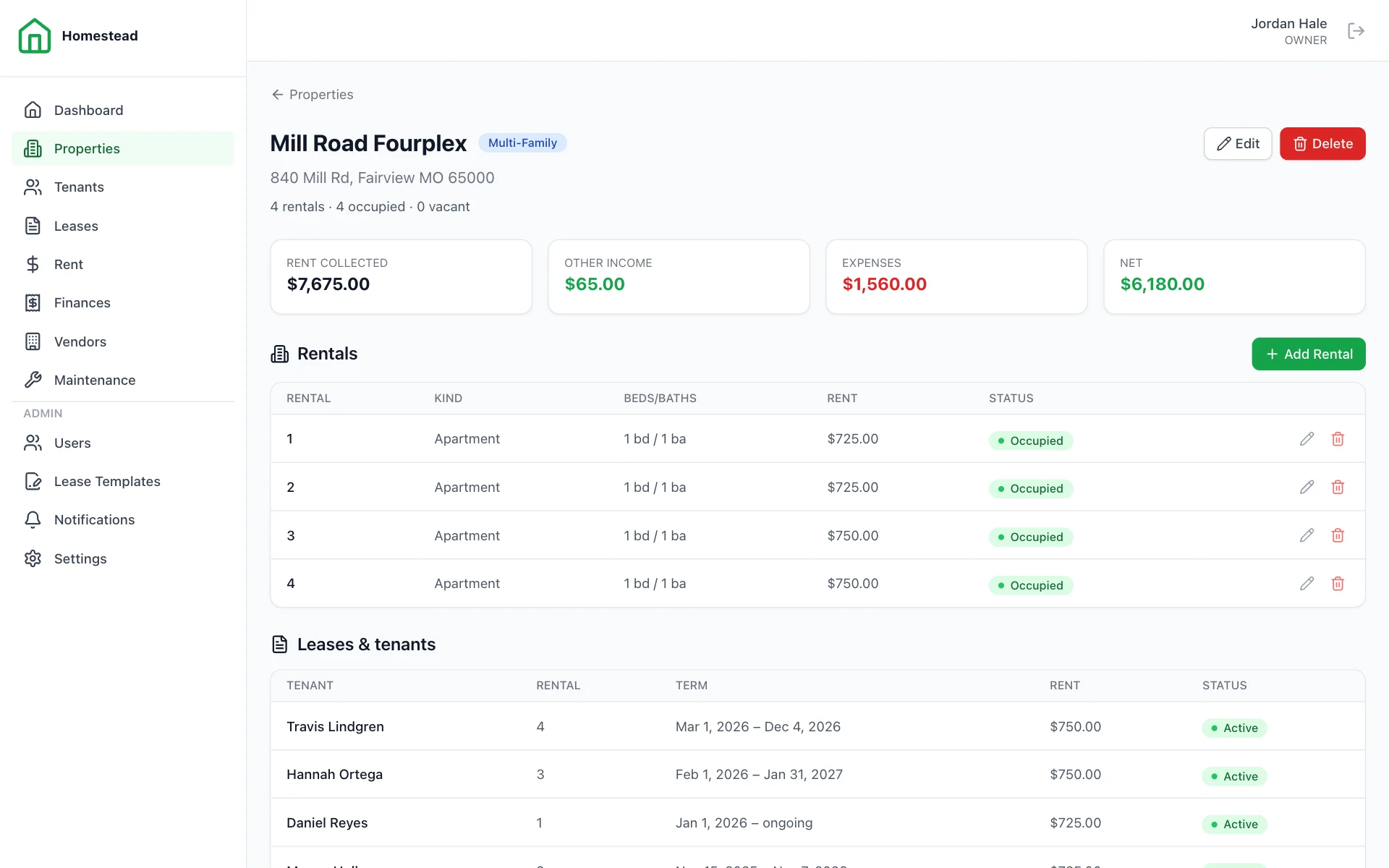
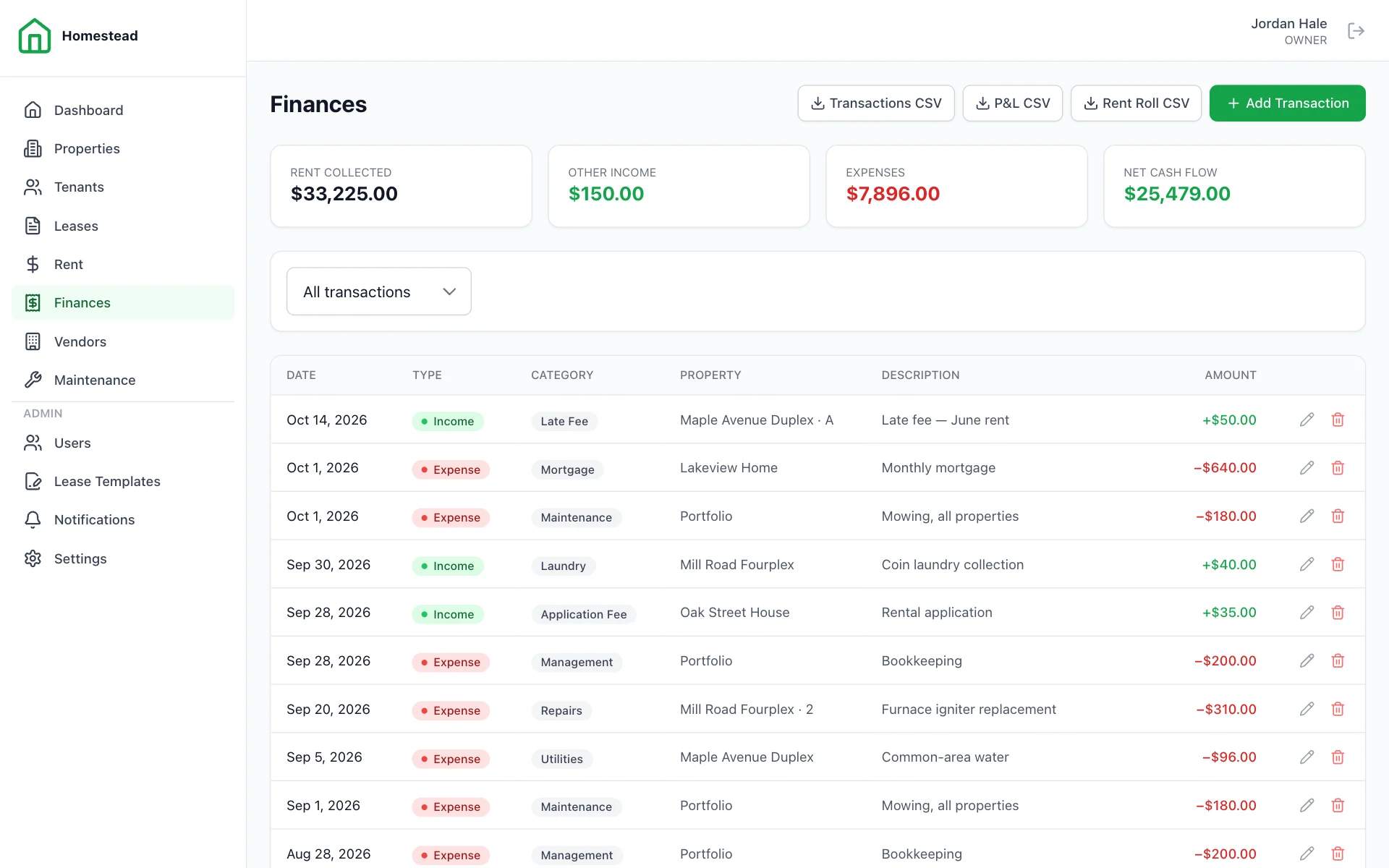
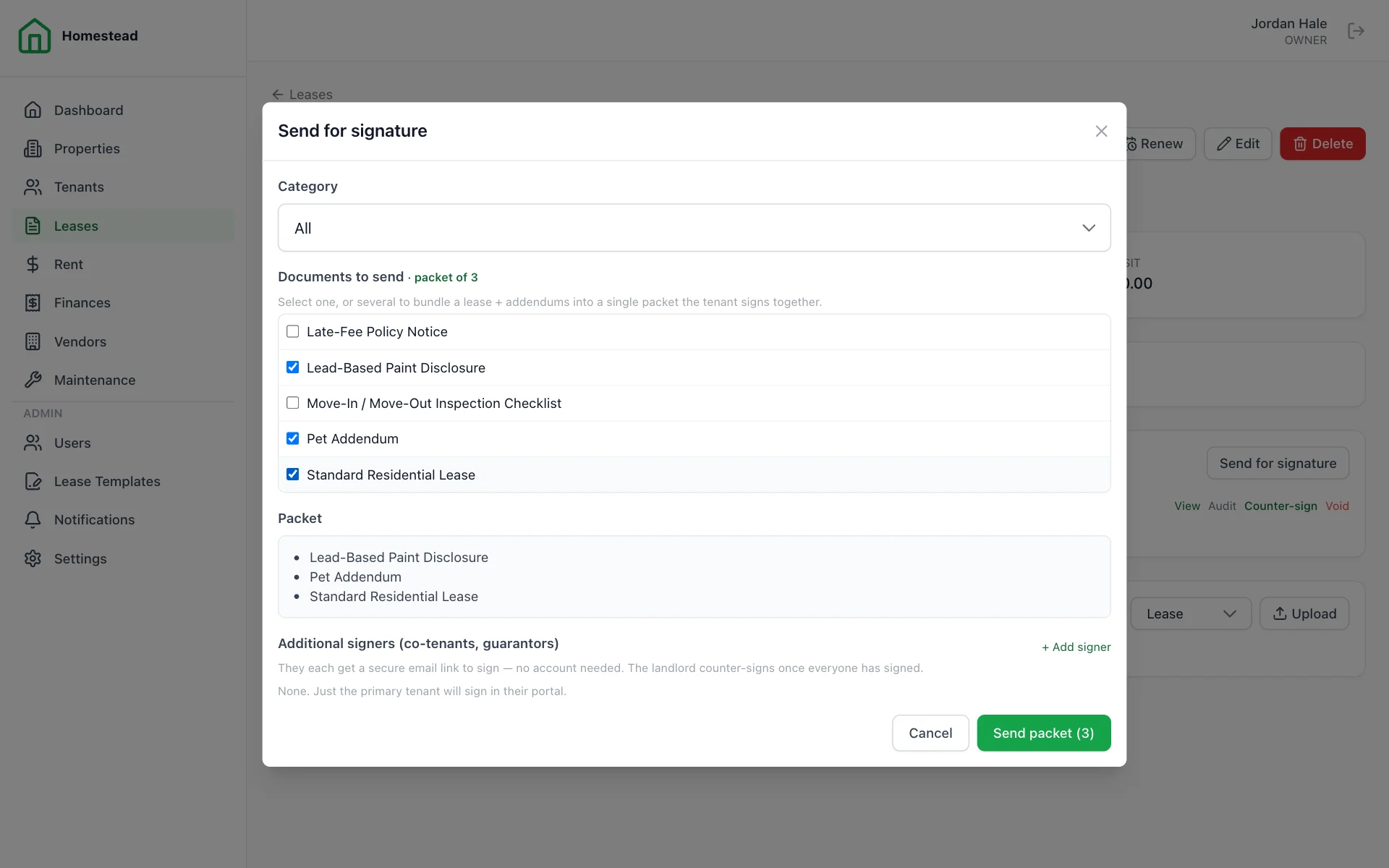
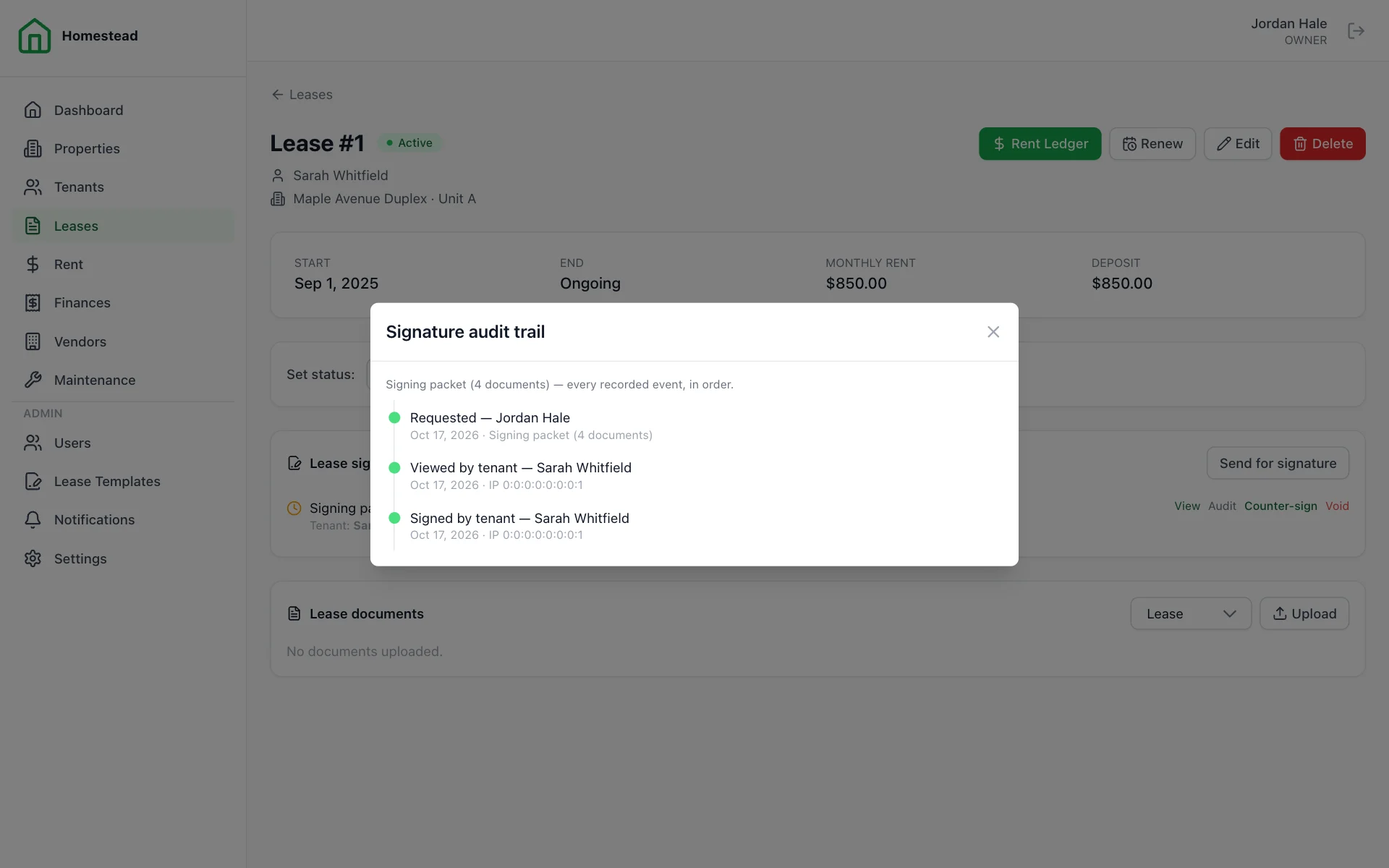
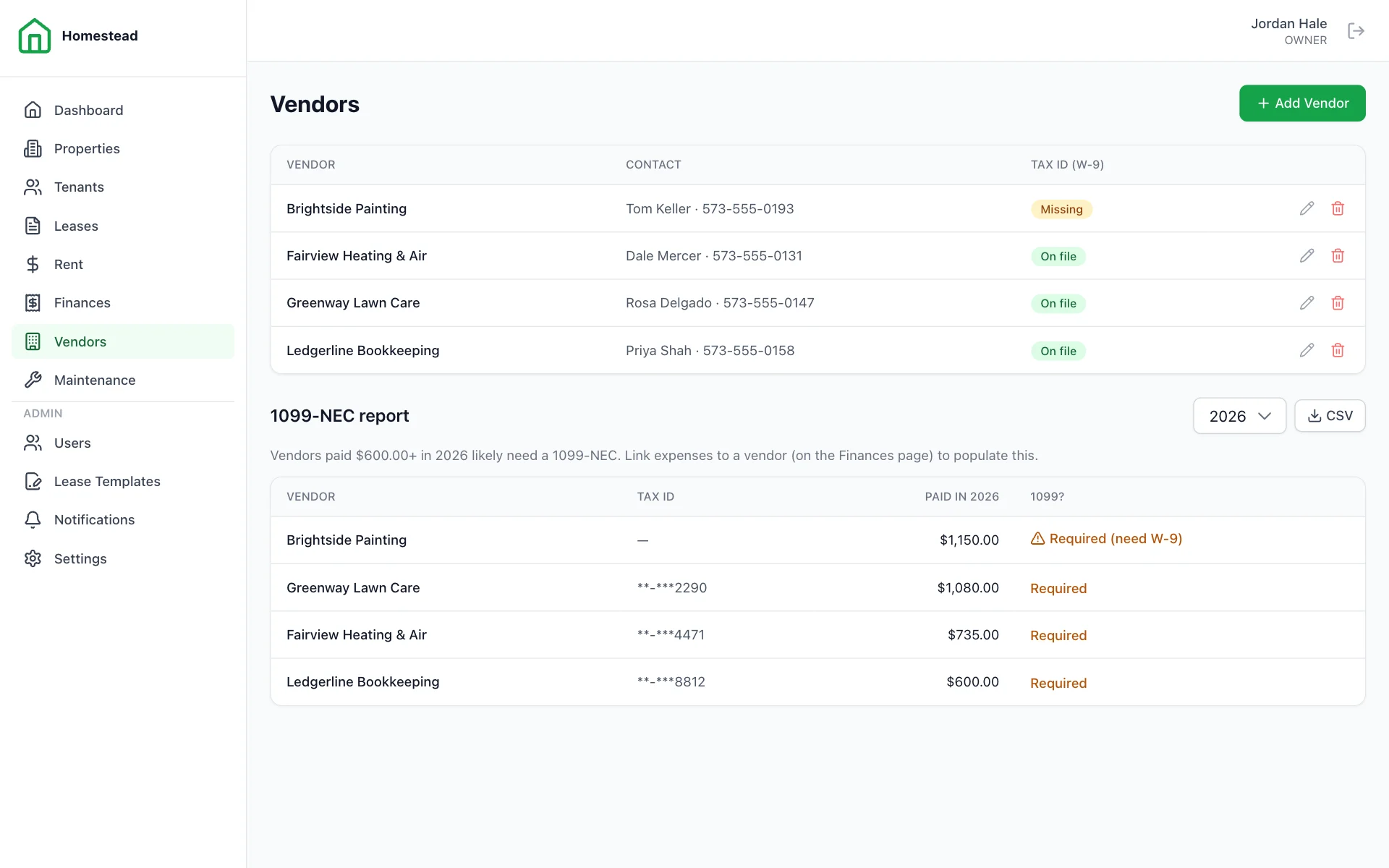
Screens from the app with sample data.
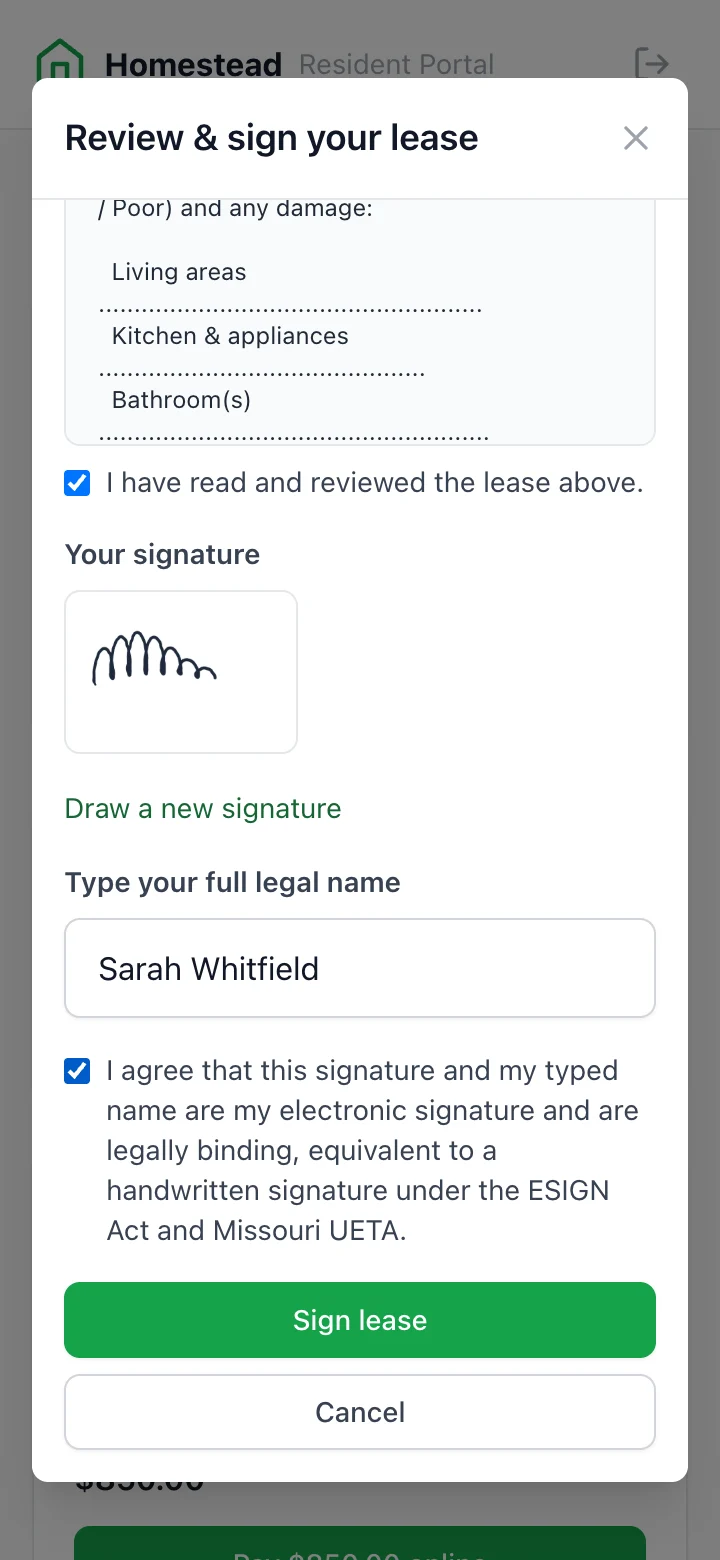
Signed without a printer
Residents read the whole document, draw their signature or reuse a saved one, type their name and agree to sign electronically under the ESIGN Act and UETA. Homestead fingerprints the document so what was signed can't quietly change, sends reminders before the request expires, and nudges the landlord when it's their turn to counter-sign.
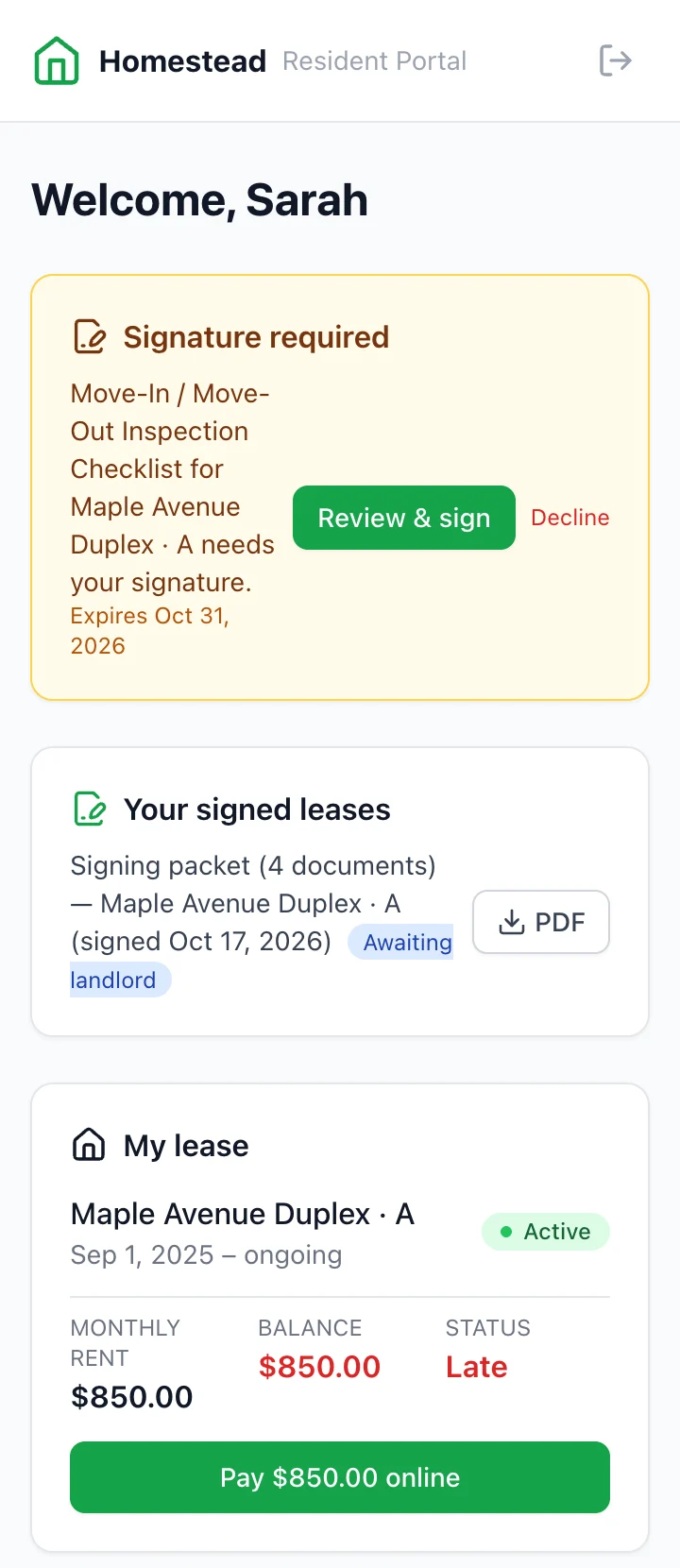
A portal for residents
Every resident can get their own login. They see their lease and balance, pay online, sign what's waiting for them, download signed leases and shared documents, and send in a repair request that lands straight on the landlord's maintenance list.
Built in, everywhere
- Roles for whoever helps
- Owners, managers, maintenance staff and read-only viewers, each seeing and changing only what they should, plus residents who see only their own lease.
- Each landlord's data kept apart
- Every landlord gets their own organization, and the database keeps each one's data separate from the rest.
- Secure by default
- Sessions that time out, protection against forged requests, rate-limited sign-ins, and an allowlist of file types for uploads.
- Works on any screen
- The same app on the laptop at home and the phone at the property, no install needed.
Who builds it
I'm Brandon Ray. I originally built Homestead as a side project for my nephews and their rentals, then made it multi-tenant so any landlord can run their properties on it under their own account. By day I build mobile apps and the platforms behind them, including 20 Android apps on a retail platform serving 8,000+ stores, and I build products like this one through my company, OnesAndZeros. Homestead runs on the same foundation as PlantOps.
See it with your rentals.
Tell me how many properties you have and how you keep track of them today. I'll walk you through Homestead with a setup that looks like yours.